Choose one job before filling a single pocket.
A work apron becomes useful when it carries a few things you repeatedly need. It becomes cumbersome when every pocket turns into a place for something that might come in handy. Before organizing it, name the next job in one sentence: repot three houseplants, label a tray of seedlings, assemble a small shelf by hand, or sketch at the studio table. That sentence gives you a much better packing list than “general workshop supplies.”
Set the tools and small items for that job on a table. Separate the objects you will use repeatedly from those needed only at the beginning or end. A pencil and a short set of plant labels might travel with you. A large bag of potting mix, a full box of hardware or a bottle of cleaning product belongs at the station. The apron should reduce repeated trips without turning your clothing into the main storage system.
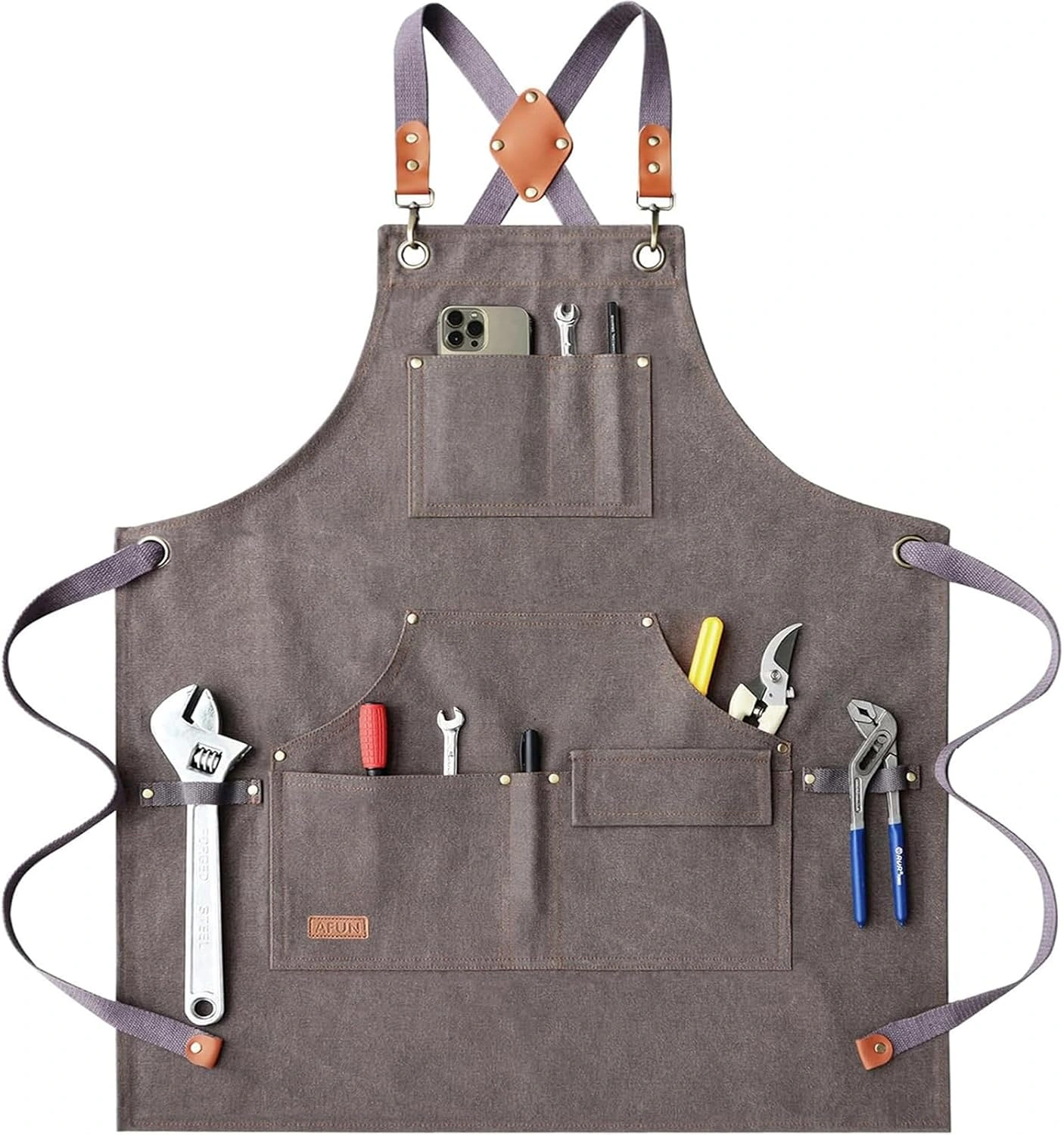
Our canvas tool aprons use 16 oz cotton canvas with a water-repellent finish, divided front storage and side loops. Our classic canvas aprons have three front pockets, while the 12 oz line offers a lighter construction. Choose the storage layout for the objects you actually use. More compartments are helpful only if their placement suits your routine.
This guide is about ordinary gardening, organizing and creative work. It does not assign a load rating to the pockets or a protection rating to canvas. Follow the safety instructions for your tools, materials and equipment. For the apron itself, the practical goal is simple: know where the useful small items are, keep the load modest, and be able to empty everything without a search at the end.
Make a pocket list, a tray list and a stay-put list.
Divide the items on your table into three groups. Pocket items are small, suitable to carry and used often enough to justify their place. Tray items move with the job but are better supported by a flat surface or a separate container. Stay-put items remain at the bench, potting station or cupboard. This simple division prevents a large pocket from becoming an invitation to carry something awkward.
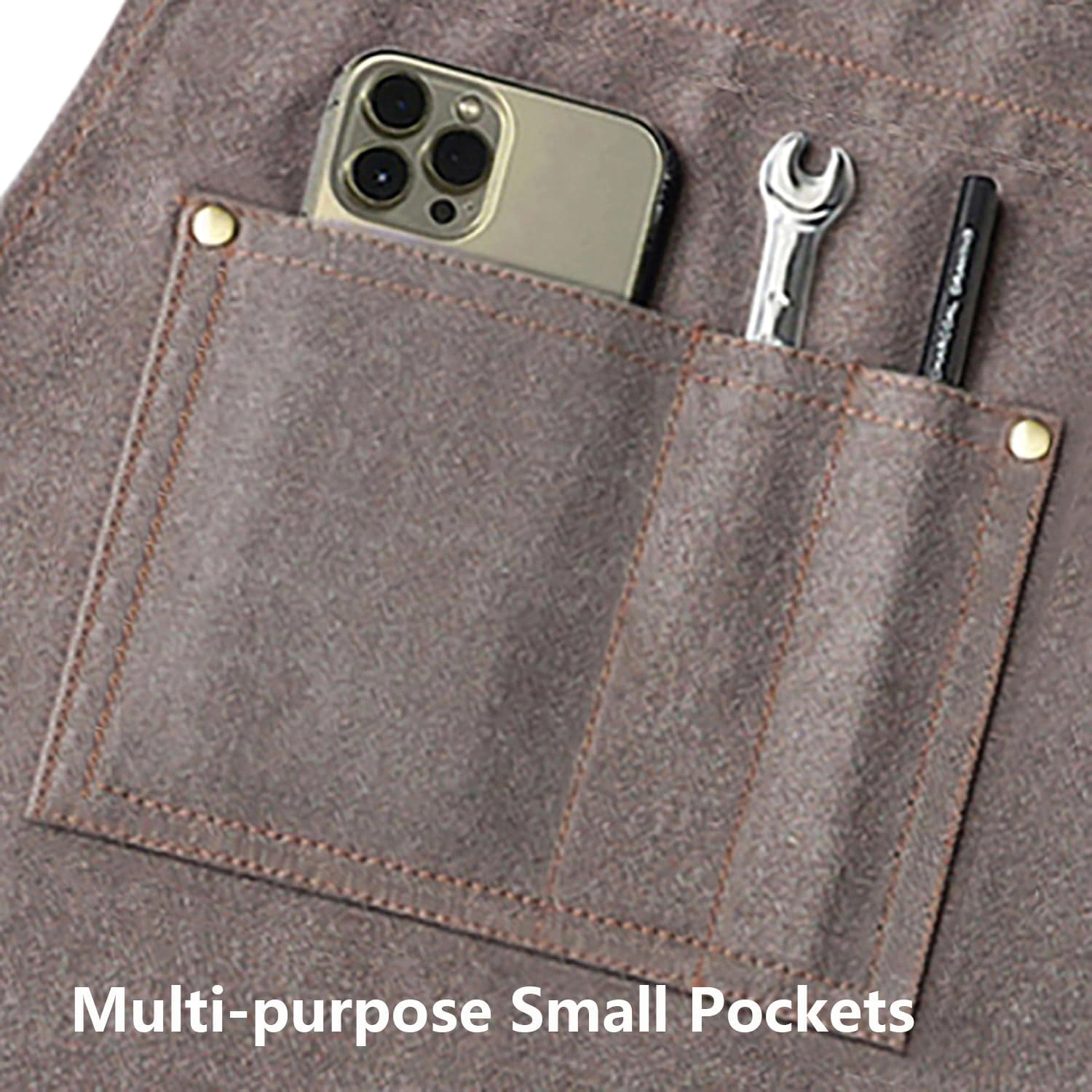
For a planting session, the pocket group might contain a pencil and a small bundle of blank labels. A tray can hold plant pots, seed packets kept appropriately dry and the tools for the immediate task. Potting mix and a watering container stay at the station. The exact division depends on the size and shape of your equipment. A photograph of a pocket holding a tool does not confirm that your larger version fits securely.
For a craft table, choose the items you keep setting down and losing: perhaps a capped marker, a short ruler that fits safely or a small notebook. Keep open paint, adhesives and sharp tools in their suitable holders. Do not use an apron pocket as a temporary container for a chemical product or an exposed blade. The practical convenience of carrying something should never override the instructions for handling it.
Now remove duplicates from the pocket group. Carrying three pencils because there is room is different from having a reason to use three pencils. Put the spare at the station, where you can find it if needed. Leave some space empty. You may need to bend, sit, lift a pot close to your body or move through a narrow doorway. Empty space makes those ordinary movements easier to assess.
| Task | Consider carrying | Keep at the station |
|---|---|---|
| Labeling seedlings | A capped marker and a few labels | Seed packets, trays and the main label supply |
| Hand assembly | A pencil and a small suitable measuring tool | Hardware containers, adhesives and larger tools |
| Drawing or paper craft | A notebook and selected capped pens | Cutting tools, paper stacks and open materials |
Give each area a purpose you can remember.
Choose a consistent place for the item you use most. If you keep reaching for a pencil with your right hand, try a suitable pocket on that side, then repeat the movement with the apron on. Your dominant hand is a useful starting point, but it is not the only consideration. You may hold a pot or a workpiece with that hand, making the other side more convenient during the actual task.
Use separate compartments to keep unlike objects from tangling together. A clean note card does not benefit from sharing a space with loose soil, and a small measuring tool can become difficult to find under miscellaneous scraps. Group items by the way you retrieve them, not by their color or appearance. A setup should be easy to remember when your attention is on the job rather than on the apron.
Balance the load across the front without trying to fill both sides equally. If one object makes a pocket pull noticeably, move it to the tray instead of adding another object as a counterweight. The straps support the garment, but they do not make an uncomfortable load appropriate. There is no published load capacity here to use as a target. Comfort and secure placement during ordinary movement are reasons to carry less.
Side loops require the same judgment as pockets. Use them only for items that sit securely and remain clear of your task and surroundings. Avoid long dangling objects that swing when you walk or catch when you turn. Around machinery, follow the equipment's clothing rules, which may rule out loose ties or an apron altogether. A useful loop during a stationary hand task may be unsuitable in another workspace.
Set up for a specific garden session.
A short session tending houseplants is different from moving between several outdoor beds. For houseplants, a single tray on a protected work surface may hold nearly everything. The apron can keep a pencil and labels nearby while its front panel provides ordinary clothing coverage. Put the watering container down before reaching into a pocket, and keep damp or dirty items away from the clean notes you want to save.
For seedling work, prepare labels before your hands become occupied. Count out a small batch and leave the rest at the station. Decide where completed labels will go so you do not mix them with blanks. A pocket can hold a short list of varieties, but seed packets are often easier to manage in a dry, stable container. Keep the written instructions with the packet instead of separating information you will need later.
When moving among outdoor plants, let a suitable garden caddy carry the bulk of the equipment. Do not force a long or sharp tool into a pocket simply because you would prefer one fewer trip. Keep tools in their intended protective holders and check what their makers recommend for carrying them. The apron is most useful for the small supporting items around the task, not for replacing every other form of storage.
At the end, empty the pockets before leaving the work area. Return reusable labels and pens, remove loose debris and put tools where they can be cleaned appropriately. This keeps the next session from beginning with yesterday's pocket contents. It also makes it easier to keep a gardening apron separate from the apron used for preparing food. Our kitchen guide covers that different routine.
Build a different setup for the studio or bench.
At a creative table, the problem is often a small item disappearing under larger materials. A consistent pocket for a capped pen or notebook can reduce that search. Keep the apron close enough to your normal posture that you can reach the pocket without twisting awkwardly. If most work happens while seated, check the setup seated from the beginning rather than fitting everything while standing.
For drawing, place the working selection of pens or pencils in an appropriate container on the table. Use the apron for a small supporting item if it helps, rather than trying to wear the whole collection. A tall tool in an open chest pocket may tip toward the work when you lean. Check the real dimensions and your posture. When the table is the better place, use it.
For simple hand assembly, sort small parts in containers before starting. Loose screws and fittings are easy to overlook during pocket emptying and can press uncomfortably through fabric. If you carry a small suitable closed container, test whether it stays secure and remains comfortable when you sit or bend. Keep the main supply on the bench, labeled by the stage of the project if that helps you follow the instructions.
For painting, adhesives or finishing products, follow the material label and workspace requirements. A water-repellent apron is not chemical-resistant protective equipment. Keep open containers, contaminated cloths and products that require special handling outside the pockets. Set up the necessary protection and ventilation for the task separately. Choosing a useful apron layout is only an organizing decision; it does not determine whether a material is suitable to use in that room.
Choose the apron around the storage you need.
If your pocket list is a notebook and one small item, three broad front pockets may be enough. Our classic cotton canvas line gives you a chest pocket and two lower pockets in a substantial 16 oz construction. The 12 oz water-repellent line offers a lighter fabric with the same broad division. Start there if extra compartments would add complexity without solving a problem you actually have.
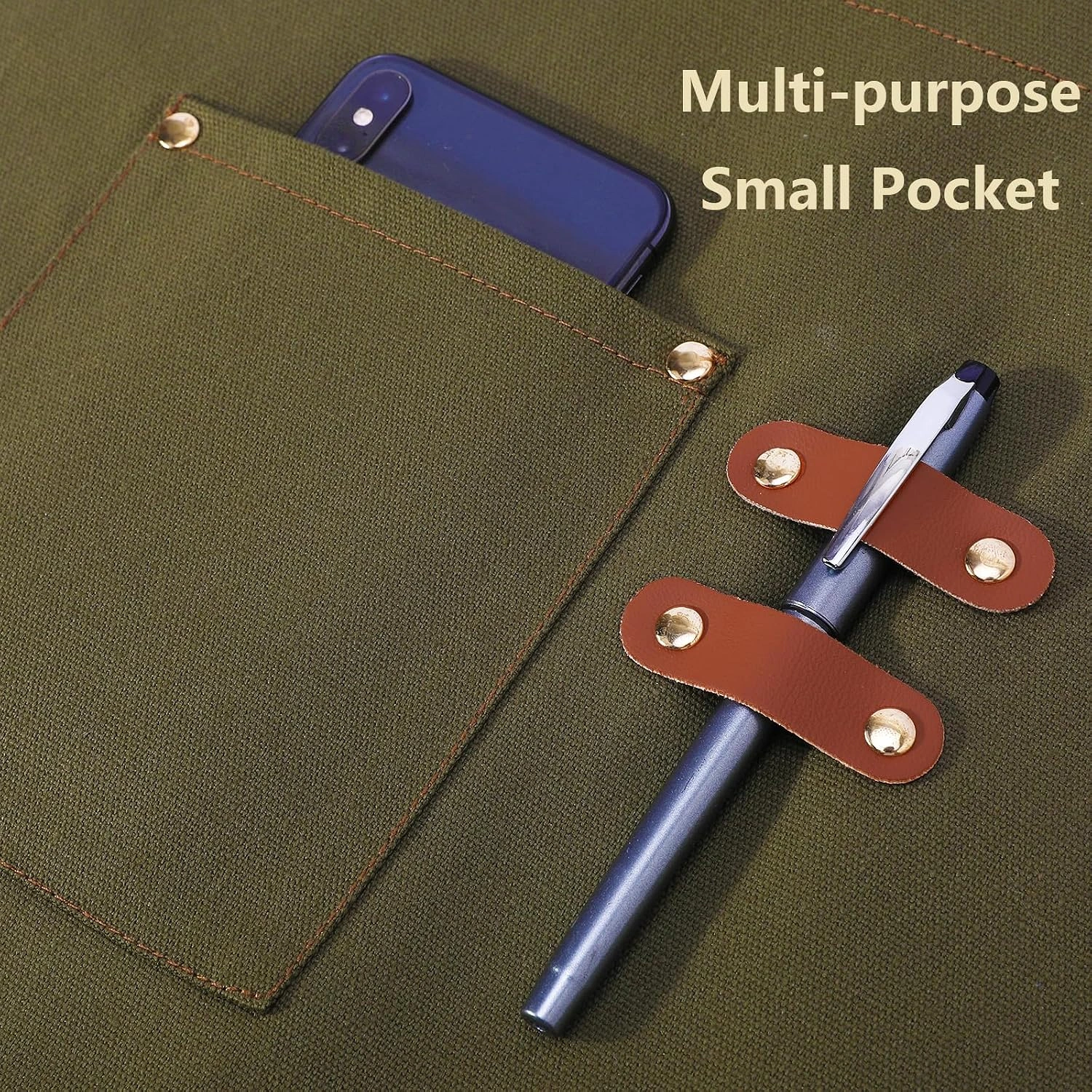
If you repeatedly retrieve several small hand tools, the divided layout and side loops on the tool line may be worth a closer look. Open the gallery and compare the shape of each area with the objects on your list. We do not publish a universal claim that every phone, tool or notebook fits. Photographs are a useful view of the construction, but the dimensions and shapes of your equipment still need a personal check.
Fabric choice is separate from pocket choice. The tool line uses 16 oz water-repellent cotton canvas; the classic line uses 16 oz cotton canvas without the same finish claim. The lighter range uses 12 oz cotton canvas with a water-repellent finish. Do not infer that all heavy canvas is waxed or that all water-repellent fabric follows the same cleaning routine. Follow the selected product details and the garment label.
Fit can settle the choice between otherwise appealing layouts. A pocket arrangement that looks useful in a flat photograph may sit differently over your normal clothes. Compare the three AFUN styles, then use the cross-back fitting sequence to check coverage and reach. Choose color after those practical decisions. A preferred shade cannot move a pocket to a different position.
| Construction | Storage layout | A useful reason to consider it |
|---|---|---|
| Classic 16 oz canvas | Chest pocket and two lower pockets | You prefer substantial fabric and a simple arrangement. |
| 12 oz water-repellent canvas | Chest pocket and two lower pockets | You want the lighter construction with a water-repellent finish. |
| 16 oz tool apron | Divided front storage and side loops | Your task calls for separate places for small hand tools. |
Test the arrangement with empty pockets first.
Put the apron on over your usual work clothes and straighten the cross-back straps. Set the bib height, balance the shoulders and secure the waist before adding tools. Reach toward a clear work surface, turn and sit if that is part of the task. An apron that feels awkward while empty needs a fit adjustment before a pocket layout can be judged fairly.
Add the proposed pocket items one at a time. After each addition, repeat the movement most relevant to the job. For potting, that might be leaning toward the table; for a seated craft, it may be reaching across the work surface. Keep the test away from live equipment and messy materials. Remove any item that protrudes, shifts or presses uncomfortably instead of assuming you will stop noticing it.
Retrieve each item with the hand you expect to use. Can you find it without looking? Can you return it without catching another object? Is it still secure when you change posture? These questions provide more useful information than counting the available pockets. A compartment does its job when it makes one movement straightforward, even if another compartment stays empty.
After a short session, place the contents back on the table. Mark the things you actually used, and return the rest to the station for the next attempt. Change one part of the arrangement at a time so you can tell whether it helped. Keep a different setup for a different activity. A planting afternoon and a paper-craft session do not need to share the same permanent pocket inventory.
Clean tools and empty pockets are separate jobs.
Emptying the apron is the first step in putting the workspace away. Cleaning the tools is another. A tool that looks free of loose debris may still need cleaning or disinfection according to its use. University of Minnesota Extension explains the connection between gardening tools and the spread of plant disease, and gives instructions for cleaning before disinfection. Follow that guidance and the tool and product labels when choosing a method.
“Dirty gardening tools and pots can spread disease from an infected plant to a healthy one.”
University of Minnesota Extension, Clean and disinfect gardening tools and containers
That guidance concerns tools and containers; it is not a washing recipe for an apron. Keep cleaning products at their appropriate station and follow their instructions. Do not transfer a tool-disinfection method to cotton canvas, metal clips or trim. The apron has its own care label, and the finish or detachable components may need a different approach from the tools carried during the job.
Check every pocket corner for small parts, plant material and paper before washing. Remove loose dry debris as appropriate and inspect the straps and stitching while the garment is empty. Follow the label for the actual wash and dry method. Store the apron fully dry, separately from food-preparation clothing when it has been used for gardening or studio work. Our care checklist keeps the preparation steps together.
A predictable storage place makes the next session easier. Hang or fold the clean apron according to the space you have, keep detachable components together, and return tools to their proper storage. Avoid leaving a loaded apron hanging indefinitely as a substitute for a tool organizer. Empty pockets make it clear what is ready to wear and what still needs attention.
Keep the arrangement that earns its place.
After several ordinary sessions, you will know which pocket items help and which only travel along. Keep that small list with the task rather than with the apron as a permanent rule. A new project may call for a different setup, and a change from standing to seated work may change what feels comfortable. Recheck the fit whenever you add a heavier clothing layer or carry different objects.
If you share the workspace, make the system understandable to the next person. Shared tools should return to a shared place, not remain hidden in someone's apron. Label containers at the station if needed, and leave the apron empty after use. That habit lets a borrowed apron begin with a fresh fit and a deliberate selection of tools rather than somebody else's unfinished task.
Explore our tool apron collection if separate storage is the detail you need, or compare the simpler layouts in classic canvas and the lighter 12 oz range. Examine the chosen color's gallery, check the fit guidance and confirm the selected option before ordering. The right pocket setup is the one that makes your next small job easier to begin and easier to put away.